

How to Fall Asleep Fast
Why Falling Asleep Fast Has Become a Modern Struggle
If you’ve ever wondered how to fall asleep fast, you know the feeling: the lights are off, the room is quiet, but your mind refuses to slow down. Minutes stretch into hours, and sleep feels frustratingly out of reach.
This challenge doesn’t belong to only a handful of unlucky sleepers, it’s become a widespread issue. Growing stress, heavier schedules, and constant digital stimulation have pushed more people into long, restless nights. The ability to drift off quickly, something that once happened almost automatically now slips away for millions.
And the effects spread everywhere: foggy thinking, lower energy, irritable moods, and reduced physical resilience. Learning how to fall asleep fast isn’t about convenience, it’s about rebuilding a foundation that supports clearer days and healthier long-term outcomes.
Understanding the Sleep Crisis: How to Fall Asleep Fast
Scale of the Problem
Surveys in 2020 showed a large portion of adults regularly struggled to fall asleep. Millions more live with sleep-related conditions that make fast sleep onset even harder.
Experts recommend a certain range of nightly rest for good health, yet many fall far short of it. This gap highlights a growing problem: difficulty falling asleep has shifted from an occasional annoyance into a common challenge.
Consequences of Chronic Poor Sleep
Lying awake longer than intended doesn’t only trigger next-day fatigue. Research links ongoing sleep loss with higher blood pressure and greater risk of type 2 diabetes. Long-term data also shows measurable differences in lifespan for people whose sleep consistently falls short.
In short: when the body stays alert long past bedtime, the impact is far deeper than just feeling tired.
What “Normal” Sleep Latency Looks Like
Most people fall asleep within ten to twenty minutes. When this window stretches past thirty minutes regularly, something in the body, mind, or environment may be out of sync.
A smooth shift into sleep involves subtle changes: slower breathing, a calmer heartbeat, looser muscles, and a mild drop in core temperature. Anything that disrupts these signals, noise, heat, bright screens, or stress makes falling asleep much harder.
That’s why fast sleep onset requires alignment: the inner signals and the outer space both need to point toward rest.
Breathing Techniques That Calm the Nervous System
The Physiology Behind Breath and Sleep
Slow, controlled breathing nudges the body into its calming mode. Heart rate eases, tension loosens, and thought patterns quiet. When practiced consistently, this shift becomes a reliable pathway into faster sleep.
The 4-7-8 Method
1. Exhale fully through the mouth.
2. Inhale through the nose for four seconds.
3. Hold for seven seconds.
4. Exhale slowly for eight seconds.
5. Repeat several rounds.
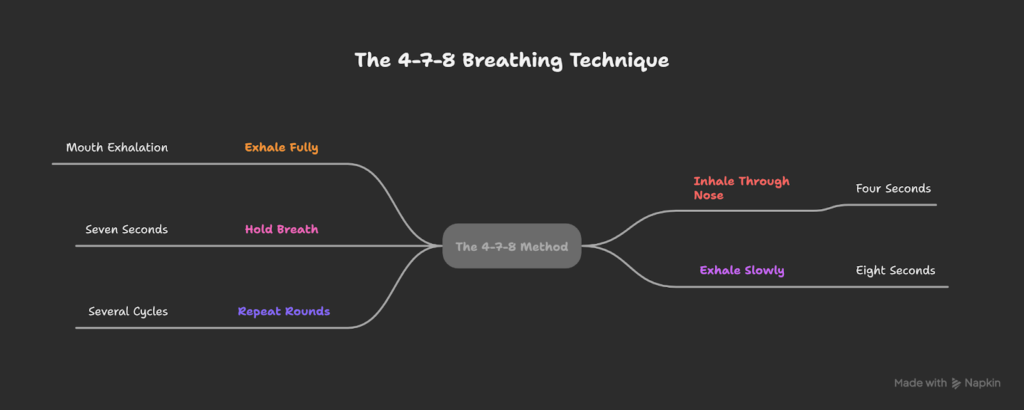
This deliberate pacing helps silence mental noise and slow the body toward rest a powerful tool when learning how to fall asleep fast.
Box Breathing
1. Inhale for four seconds.
2. Hold for four seconds.
3. Exhale for four seconds.
4. Hold for four seconds again.
The steady rhythm gives the mind a simple pattern to follow, which can push worries out of the spotlight.
Progressive Muscle Relaxation & Body Scanning
Why Physical Tension Delays Sleep
Tight muscles signal alertness. When the body stays in this state, the mind follows. Releasing tension creates physical calm, which then supports mental calm.
Progressive Muscle Relaxation Technique
Move part by part through the body, tightening each muscle group gently, then releasing fully. The repeated softening creates a chain of comfort that supports quick sleep onset.
The Military Sleep Method
This technique blends slow breathing, physical loosening, and mental quieting. You soften the face first, then the neck, shoulders, arms, torso, and legs. As the body unwinds, thoughts fade, creating an opening for sleep.
The Power of Mental Imagery
Why Counting Sheep Fails
Repetitive tasks rarely hold attention long enough to quiet worry. They leave too much mental room for stress to return.
Evidence for “Imagery Distraction”
Oxford researchers found that people fall asleep more quickly when picturing detailed, calming scenes rather than using simple distractions. The richness of the imagery gives the mind something steady and soothing to settle into.
How to Build Vivid Scenes
Imagine a place where your body feels comfortable focusing on air temperature, sound, light, and touch. Maybe you’re in a hammock near the water, feeling a breeze and hearing soft waves. The more detail you add, the easier it becomes to leave wakefulness behind.
Paradoxical Intention: The Technique That Works by Not Trying
· How worry about “not sleeping” keeps people awake
· 2021 findings showing better rest when pressure to sleep is removed
· How to practice: gently repeat the thought “I’m not going to fall asleep right now”
· Why releasing pressure allows the body to drift off naturally
This counterintuitive method often helps people fall asleep much faster because it removes performance anxiety.
Optimizing Your Sleep Environment
A. Temperature: The Most Critical Environmental Variable
· Ideal range: 60–67°F for adults
· Warmer rooms reduce REM stability
· Data shows sleep quality drops at temperatures above 77°F (25°C)
· Older adults sometimes benefit from slightly warmer settings
B. Darkness, Quiet, and Comfort
To learn how to fall asleep fast, the room itself must support rest:
· Keep clocks out of sight
· Place phones outside arm’s reach
· Use earplugs or white noise when needed
· Choose mattress and pillow support that matches your body’s needs
Establishing a Consistent Sleep Schedule
Why Wake Time Matters More Than Bedtime
A steady wake-up time anchors your internal clock. Consistency here makes falling asleep far easier.

Using Mild Sleep Restriction Strategically
Setting bedtime 6–7 hours before your chosen wake time increases natural sleep pressure.
Extending Sleep Gradually
Once falling asleep becomes steady and predictable, you can move to bedtime earlier in small steps.
The Key Goal
Settle into sleep within about 20 minutes.
Daytime Habits That Shape Nighttime Sleep
Morning Light Exposure
Morning sunlight strengthens circadian rhythms and makes bedtime feel more natural later.
Caffeine Timing: How to Fall Asleep Fast
Caffeine lingers for hours. Sensitive individuals may need to avoid it after midday. Remember: tea, chocolate, soda, and certain medicines contain caffeine too.
Exercise
Regular movement deepens sleep, but intense workouts too close to bedtime can delay sleep onset.
Managing Night time Worry: How to Fall Asleep Fast
Why Thoughts Get Louder at Night
When the world quiets down, unresolved concerns can rush in.
“Worry Time” During the Day
Writing concerns, plans, or tasks earlier in the day clears mental clutter before bedtime.
When Mindfulness Helps
Research on older adults shows that mindful practices reduce pre-sleep arousal and improve the ability to fall asleep faster.
The 30-Minute Rule: Breaking the Wakefulness Loop
If you can’t fall asleep within about 30 minutes, staying in bed trains the brain to associate the space with alertness.
Instead:
· Move to another dimly lit room
· Read something calm
· No devices
· Return only when drowsy
This retrains the brain to link bed with sleep.
When It’s Time to Seek Professional Help
Seek support if you:
· Regularly lie awake for long periods
· Wake often and can’t return to sleep
· Snore loudly, gasp for air, or have restless legs
· Battle chronic insomnia
Many over-the-counter approaches mask symptoms but don’t solve root causes. A professional can identify underlying conditions.
Conclusion: How to Fall Asleep Fast
Falling Asleep Fast Is a Skill and You Can Learn It
Learning how to fall asleep fast isn’t about tricks, it’s about rebuilding the signals that guide your body into rest. Through steady practice, healthy habits, and a supportive environment, fast sleep onset is absolutely achievable.
With patience and consistency, restful nights can become normal again one small shift at a time.
FAQ: Quick Answers About How to Fall Asleep Fast
1. Is it normal to stay awake for a while before drifting off?
Yes. Ten to twenty minutes is typical. Longer periods may indicate something in your routine is getting in the way.
2. Can breathing exercises help me fall asleep faster?
Absolutely. Slow, steady breathing activates the body’s calming mode and helps clear mental clutter.
3. Do screens before bed make sleep harder?
Often, yes. Bright screens stimulate the brain and delay the natural slowing that leads to sleep.
4. Why do thoughts get louder at night?
Quiet surroundings leave more room for worry to surface. Writing concerns earlier in the day reduces this rush of mental noise.
5. When should I see a sleep specialist?
If falling asleep regularly takes more than half an hour, or if waking and not returning to sleep becomes frequent, a specialist may help identify underlying issues.