
Blackout Curtains for Sleeping
The Light We Don’t See (But Definitely Feel)
Modern homes glow long after sunset. Streetlamps slip through blinds, screens pulse across bedrooms, and tiny LEDs flicker in the dark soft, constant reminders of a world that doesn’t switch off. We often overlook this faint brightness, yet it shapes how our bodies behave at night far more than we realize, which is why Blackout Curtains for Sleeping have become an essential tool for creating a truly restful environment.
That’s where blackout curtains for sleeping come in. They’re not just décor or a trendy bedroom accessory; they’re a practical, science-backed way to improve nightly rest and support long-term well-being. These curtains don’t simply dim a room, they help restore the rhythm your brain expects after dusk.
In this guide, we’ll explore why darkness holds such biological power, what research shows about unwanted light at night, how blackout curtains work, and why certain sleepers benefit more than others.
Why Darkness Matters: The Biology Behind Better Sleep
Light as the Master Clock
Your body’s internal timing system relies on clear signals. When daylight fades, the brain releases melatonin, the hormone that cues your system to shift toward rest. Even faint brightness at night interferes with this signal, nudging the brain toward wakefulness.
This is exactly why blackout curtains for sleeping have become essential for many households. They help protect that natural night time cue.
The Quiet Cost of Night-Time Light
Soft brightness at night might seem harmless, but it gradually erodes sleep quality. It can trigger tiny awakenings you hardly remember, making rest less restorative overall. Meanwhile, studies continue to point toward links between night time brightness and disruptions tied to metabolism and heart health. These shifts build slowly but steadily, amplifying the importance of a dark sleep environment.
The Health Impacts of Light Exposure at Night
What the Research Shows
A major community study of older adults found that those who slept in brighter rooms had higher rates of obesity, elevated blood sugar, and high blood pressure. This points to a simple truth: unwanted brightness during rest hours can disrupt biological processes connected to appetite, insulin response, and cardiovascular function.
Additional large-scale studies echo this trend, connecting both indoor and outdoor brightness with patterns linked to long-term metabolic issues. Together, this research positions night-time brightness as more than an inconvenience; it may be a factor in overall health.
Why This Matters for Everyday Sleepers
Most people don’t track the ways light shapes their body at night. They just feel groggy, restless, or wired at bedtime. When the room stays dark, night time processes run smoothly. When brightness creeps in, those processes falter.
Blackout curtains for sleeping provide an easy, reliable fix. By darkening the room fully, they help the body maintain its natural night cycle.
What Blackout Curtains Actually Do
The Technology of Darkness
Blackout curtains use dense fabrics or layered coatings designed to stop exterior brightness before it reaches the bedroom. Unlike regular drapes or thin blinds which often leave streaks of light—these curtains block nearly all illumination when installed correctly. Their construction is intentional and targeted, built to keep your sleep environment consistently dark.
The Physiological Payoff
By maintaining darkness, blackout curtains for sleeping help the brain sustain melatonin levels throughout the night. They also add an insulating barrier, reducing drafts and helping the room stay at a stable temperature, an important factor in achieving deeper rest.
Sleep Benefits You Can Expect
Falling Asleep Faster
Once brightness is removed, the brain receives a clear message: night has arrived. Many people fall asleep more quickly when their environment aligns with that signal.
Fewer Night-Time Wake-Ups
Streetlamps, headlights, and early sunrise glare commonly trigger brief awakenings. Blackout curtains reduce those interruptions, keeping sleep cycles more stable.
Longer, Deeper, More Restorative Sleep
A dark room supports healthier melatonin flow and fewer disturbances. That combination encourages richer REM cycles and more satisfying slow-wave rest phases tied to memory, recovery, and morning energy.
Who Gains the Most from Blackout Curtains for Sleeping
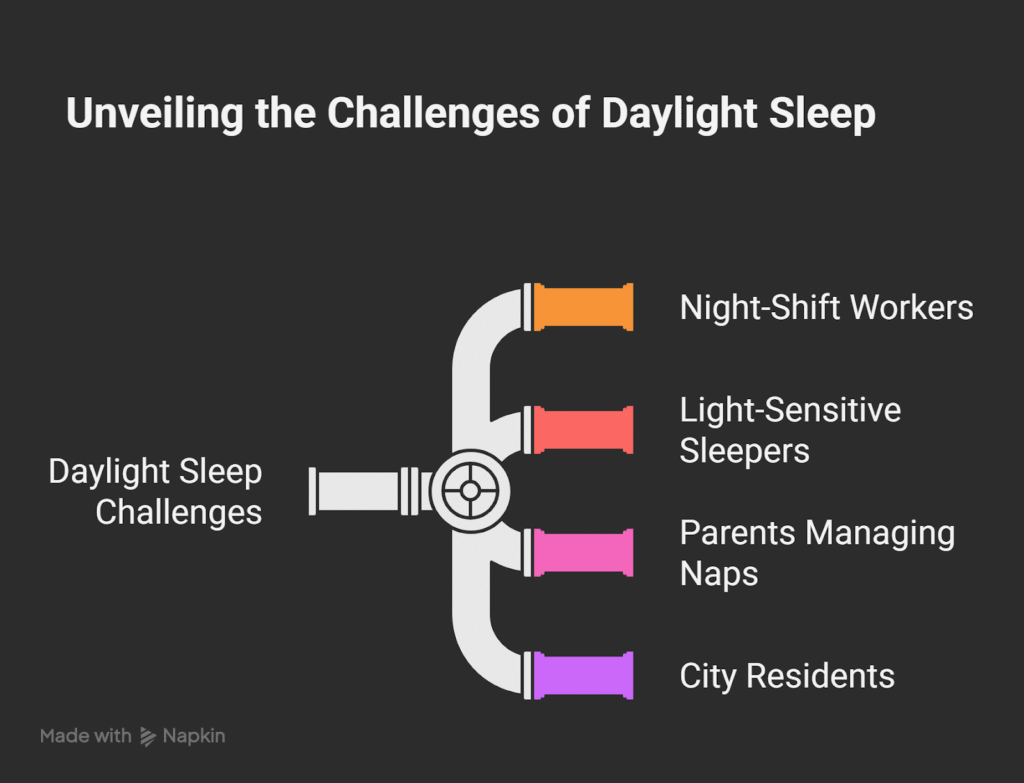
- Night-shift workers who sleep in daylight
- Light-sensitive sleepers
- Parents managing children’s naps
- City residents surrounded by constant exterior brightness
Blackout Curtains vs. Sleep Masks: A Practical Comparison
Strengths and Limitations of Each
Blackout curtains transform the entire room, creating a calmer, darker space without relying on personal gear. Sleep masks, on the other hand, block brightness directly at the eyes but only at the eyes.
Curtains stay put; masks travel well. Masks are great for planes, hotels, and mid-day rest. Curtains are ideal for building a consistent night time environment at home.
Comfort varies. Curtains never touch the body. Masks depend on straps and pressure, which some sleepers tolerate easily while others find distracting.
When to Use Both
The strongest approach is a two-layer strategy:
- Blackout curtains for sleeping at home
- A sleep mask for travel or unpredictable lighting
This ensures reliable darkness wherever you are.
Choosing the Right Blackout Curtains
Materials and Design Elements That Matter
Quality blackout panels use dense fabrics or multi-layer builds designed to stop brightness from filtering through. Some include interior coatings for added protection. Their thickness also softens outside noise and reduces heat transfer, an added bonus for comfort.
Installation Tips for Maximum Darkness
To get the best results, curtains should extend above, below, and beyond the window frame to block side leaks. A wraparound rod can close off gaps even more effectively.
If you live in a bright city area or near roadside lighting, consider pairing blackout curtains with blinds or window films for superior coverage.
Extra Benefits Beyond Better Sleep
Temperature Regulation & Energy Efficiency
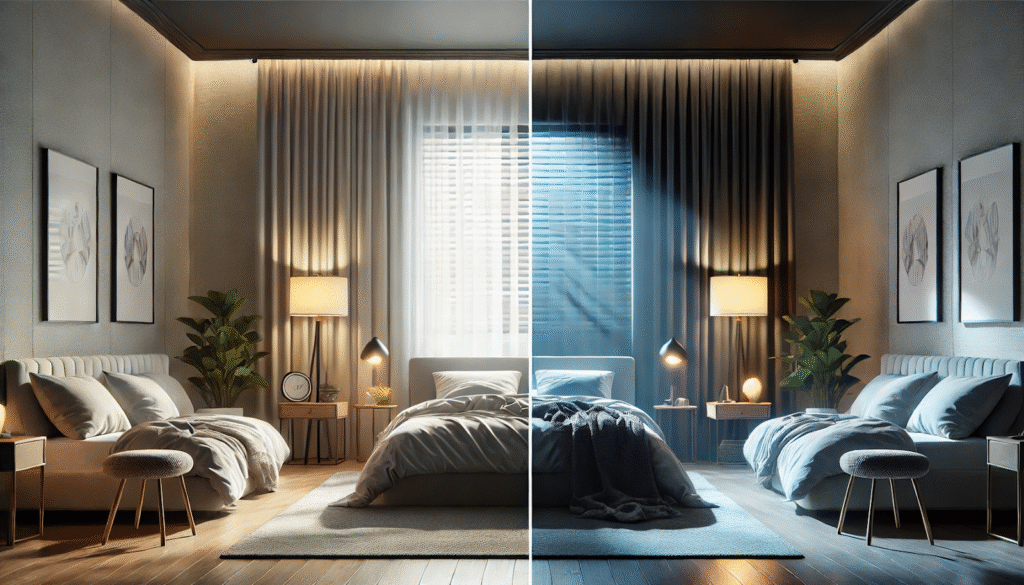
Because they add insulation, blackout curtains help keep warm air inside during winter and slow heat entry during summer. This stabilizes your room’s climate and can reduce heating and cooling usage over time.
Noise Reduction & Privacy
Heavier fabrics soften street noise and provide greater privacy from outside view useful for apartments, ground-level bedrooms, and busy neighborhoods.
Potential Downsides (And Smart Ways to Solve Them)
Cost Considerations for Blackout Curtains for Sleeping
High-quality blackout curtains can be pricey, especially for larger windows. But they tend to last and can lower energy use slightly. Budget-friendly options include blackout liners or pairing simple curtains with blinds.
Missing Natural Light in the Morning
Some sleepers enjoy waking up at sunrise. If blackout curtains feel too dark, use tie-backs during the day or choose dual-layer systems that let you switch between lighter and darker setups.
How Blackout Curtains Fit into a Holistic Sleep Hygiene Routine
They’re Effective but Not a Standalone Fix
Blackout curtains play a strong supporting role, but great sleep also depends on habits and environment.
Building a Night-Time Setting That Supports Biology
To reinforce the effects of blackout curtains for sleeping, combine them with:
- Dimmed lighting in the evening
- Reduced screen brightness
- A cool room temperature
- A consistent sleep schedules
Together, these choices help the body transition smoothly into rest mode.
The Takeaway
A darkened bedroom supports deeper rest and night-time processes linked to long-term metabolic stability. Blackout curtains offer a dependable foundation for that environment.
Conclusion: A Simple Step That Resonates Every Night
Reducing unwanted brightness may be one of the simplest, most powerful upgrades you can make for your nightly well-being. Blackout curtains for sleeping help your body follow the rhythm it expects after sunset, making room for calmer, steadier, more refreshing rest.
No major renovation required just a recognition that darkness carries more influence than we often realize. For many households, this small shift becomes a nightly reward: quiet, calm, and uninterrupted sleep.
FAQ: Blackout Curtains for Sleeping
1. Do blackout curtains really improve sleep quality?
Yes. By blocking exterior brightness, blackout curtains help maintain steady melatonin levels and reduce sleep interruptions. This creates a darker, more stable environment that supports deeper and more restorative rest.
2. Are blackout curtains better than sleep masks?
They serve different purposes. Blackout curtains for sleeping transform the entire room into a darkened space, while sleep masks only block light at the eyes. Curtains are best for long-term bedroom comfort; masks are ideal for travel or situations where you can’t control the room lighting.
3. Can blackout curtains help night-shift workers?
Absolutely. People who sleep during the day face strong, unavoidable daylight exposure. Blackout curtains give them the darkness they need to fall asleep faster, stay asleep longer, and maintain a more consistent circadian rhythm.
4. Will blackout curtains make my room too dark in the morning?
They can. If you prefer waking with natural light, choose tie-backs, dual-layer systems, or options that let you adjust how much brightness enters the room. This way, you get strong light control at night without losing morning sunlight.
5. Do blackout curtains help with noise?
To a degree. While they won’t silence a busy street, their thicker fabrics help soften everyday sounds. The result is a quieter, calmer sleeping environment especially helpful in city apartments or homes near traffic.
One Response