
How to Make Bedroom Relaxing
A bedroom should be more than just the place where the day ends. It should be where your body unwinds, your thoughts slow, and rest comes naturally. Yet for many people, the bedroom is one of the most overlooked spaces when it comes to comfort and calm. If you’ve ever found yourself lying awake, feeling overstimulated or restless, your environment may be part of the problem. Learning how to make bedroom relaxing isn’t about luxury or expensive upgrades, it’s about thoughtful choices that align your space with how your body and mind naturally wind down.
In this guide, we’ll explore practical, achievable ways to transform your bedroom into a peaceful retreat. From temperature and lighting to color, layout, and sensory details, each element works together to create a room that encourages better sleep, lower stress, and a deeper sense of ease.
How to Make Bedroom Relaxing by Setting the Right Temperature
One of the most important and often ignored factors in bedroom comfort is temperature. Your body naturally cools down as it prepares for sleep, and your bedroom should support that process rather than fight it. When the room is too warm, falling asleep becomes harder, and staying asleep becomes even harder.
For most adults, a slightly cool bedroom feels most comfortable at night. Many people sleep best when the temperature sits somewhere between 16–20°C, with the sweet spot often closer to the lower end of that range. A room that’s too warm or poorly ventilated can lead to restlessness, night sweats, and frequent waking.
In addition to adjusting the thermostat or opening a window, your bedding choices matter just as much. Breathable sheets, lightweight duvets, and sleepwear made from natural fibers help your body release heat instead of trapping it. As a result, your bedroom feels fresher, calmer, and far more inviting at bedtime.
Declutter Your Space to Create Mental Calm
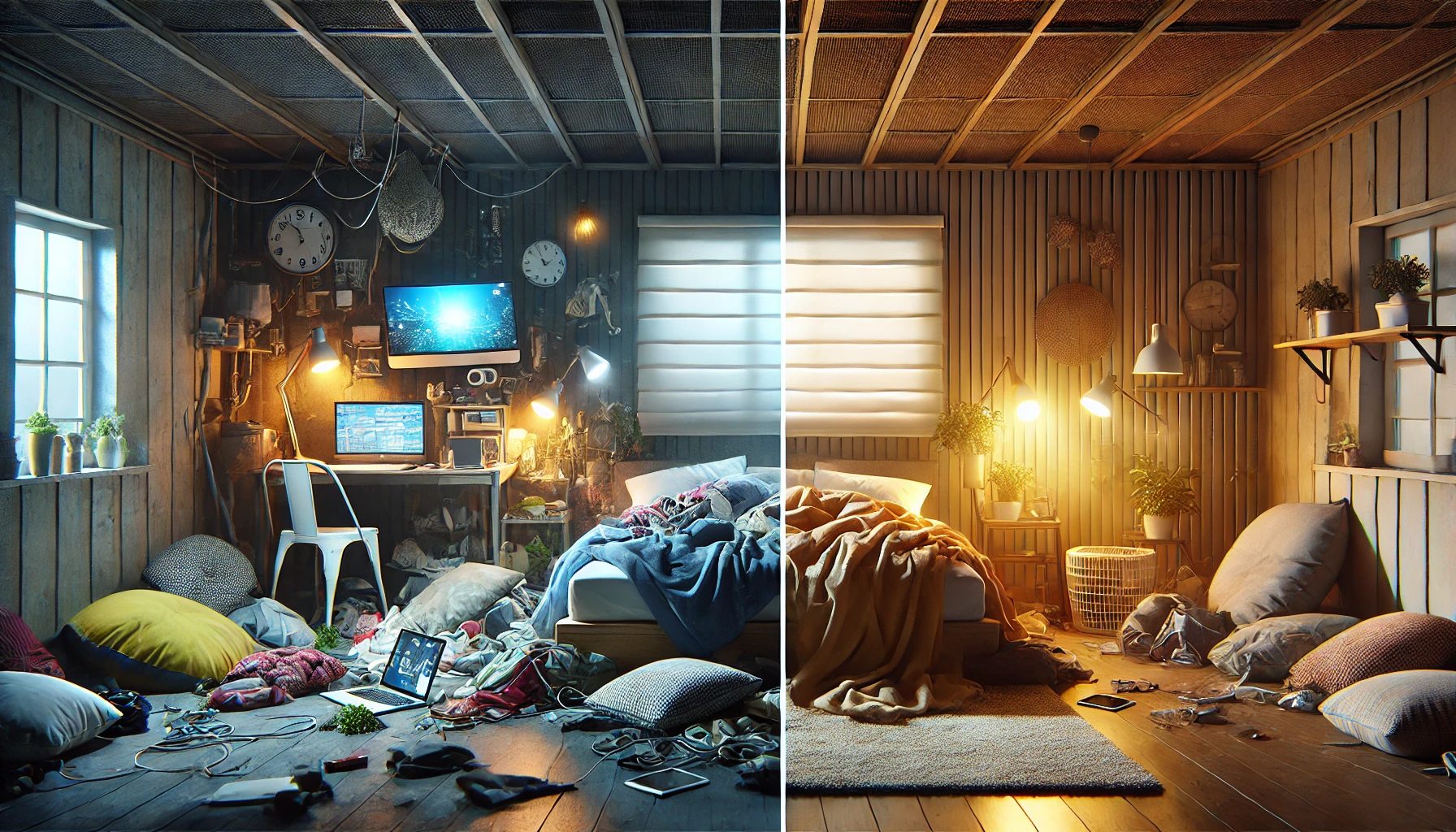
If you’re wondering how to make bedroom relaxing without redecorating, start by looking at what doesn’t need to be there. Clutter has a subtle but powerful effect on the mind. Piles of clothes, crowded surfaces, and unfinished tasks create visual noise that keeps your brain alert when it should be slowing down.
A relaxing bedroom feels open and intentional. Clear surfaces such as bedside tables, dresser tops, and floors help reduce mental stimulation. Instead of being greeted by chaos when you walk into the room, your eyes can rest, and your nervous system follows.
Closed storage is especially useful in bedrooms. Wardrobes, drawers, and storage boxes allow you to keep essentials nearby without having them constantly on display. By simplifying what you see, you make it easier for your mind to associate the room with rest rather than productivity or stress.
Choose Calming Colors That Encourage Rest
Color has a quiet but profound influence on mood. When thinking about how to make bedroom relaxing, the colors you choose for walls, bedding, and decor can either soothe or stimulate without you even realizing it.
Cool, muted tones are consistently associated with a calmer atmosphere. Shades of blue and green, in particular, tend to feel restful and grounding. Nature-inspired neutrals such as soft beige, warm white, sage green, or pale grey also work well because they reflect light gently and don’t overwhelm the senses.
On the other hand, strong, vivid colors can make it harder to relax. Bright reds, oranges, and intense purples are energizing by nature and can raise arousal levels. While they may work beautifully in social or creative spaces, they’re often better avoided in a room designed primarily for sleep.
How to Make Bedroom Relaxing with the Right Lighting
Lighting is one of the most powerful tools for shaping how a room feels. It doesn’t just affect visibility it also influences your internal clock and your ability to wind down in the evening. For this reason, thoughtful lighting is essential when learning how to make bedroom relaxing.
During the day, natural light is your friend. Opening curtains or blinds in the morning helps regulate your sleep-wake rhythm and boosts mood. A bright, airy bedroom during daylight hours feels healthier and more welcoming.
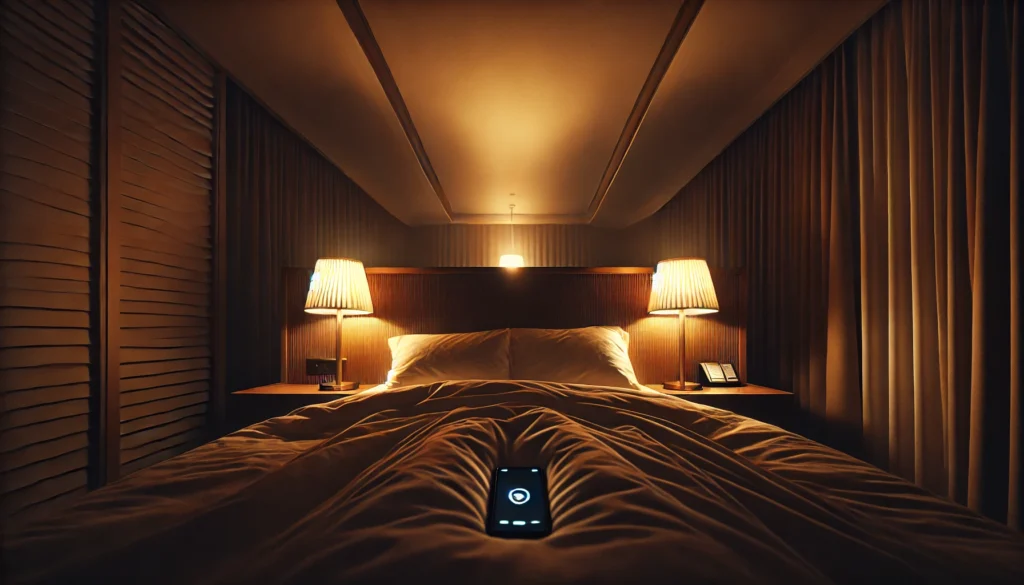
As evening approaches, however, lighting should shift. Bright overhead lights can feel harsh and overstimulating at night. Instead, use low-level lamps with warm-toned bulbs to create a softer glow. Bedside lamps, wall sconces, or floor lamps help signal to your body that it’s time to relax.
At night, darkness matters. Blackout curtains or blinds can make a huge difference, especially if you live in a city or near streetlights. A darker room allows your body to settle more fully, supporting deeper, more continuous sleep.
Invest in Comfortable Bedding and a Supportive Mattress
No matter how beautiful your bedroom looks, it won’t feel relaxing if the bed itself is uncomfortable. The bed is the heart of the room, and its comfort plays a major role in how restful the space feels overall.
Soft, breathable bedding creates immediate physical comfort. Sheets and pillowcases made from natural fabrics tend to feel cooler and more pleasant against the skin. Pillows should support your neck in a way that suits how you sleep whether on your side, back, or stomach so your body can fully relax instead of holding tension.
Equally important is the mattress. An old or sagging mattress can cause aches, pressure points, and frequent movement during the night. Over time, this discomfort can make the bedroom feel less inviting, even if you can’t consciously pinpoint why. Replacing a worn-out mattress is often one of the most effective steps in making a bedroom truly relaxing.
Use Scent and Sensory Details to Set the Mood
A relaxing bedroom engages more than just sight. Scent, texture, and sound all contribute to how safe and soothing a space feels. When used gently, sensory cues can help signal that it’s time to unwind.
Subtle fragrances such as lavender, chamomile, jasmine, vanilla, or rose are commonly associated with relaxation. You might introduce them through an essential oil diffuser, a light pillow mist, or a softly scented candle that’s extinguished before sleep. The key is subtlety: strong scents can become distracting rather than calming.
Texture also plays an important role. Soft rugs underfoot, cozy throws, and comfortable cushions add warmth and comfort, making the bedroom feel more like a retreat. In addition, gentle background sounds such as white noise or a quiet soundscape can help mask sudden noises and maintain a sense of calm, particularly in busy environments.
Arrange Furniture for Balance and Flow
The way furniture is arranged can influence how peaceful a room feels. When thinking about how to make bedroom relaxing, it’s worth paying attention to layout as well as decor.
A calm bedroom feels easy to move around. Clear pathways around the bed reduce small frustrations and help the room feel more spacious. Avoid blocking windows and vents, as this can interfere with airflow and temperature control.
Symmetry also plays a subtle role in relaxation. Matching bedside tables or lamps can create a sense of balance that many people find reassuring. When the room feels orderly and harmonious, it’s easier to let go of the day and settle into rest.
Minimize Technology and Reduce Noise
Modern bedrooms are often filled with technology, from phones and laptops to televisions and chargers. While convenient, these devices can undermine relaxation in several ways. Learning how to make bedroom relaxing often involves deciding what doesn’t belong there.
Screens emit light that can interfere with the body’s natural night-time rhythms, especially when used close to bedtime. Beyond that, devices act as mental triggers reminding you of work, messages, and unfinished tasks. Whenever possible, keep non-essential technology out of the bedroom or store it out of sight at night.
Noise is another common disruptor. Sudden or inconsistent sounds can fragment sleep, even if they don’t fully wake you. If you live in a noisy area, earplugs, white-noise machines, or soft background sounds can help create a more stable and peaceful environment.
Bring Nature and Greenery into the Bedroom
Nature has a natural calming effect, and bringing elements of it indoors can help make your bedroom feel more restorative. Even small touches can change the atmosphere of a space.
Low-maintenance houseplants, such as snake plants, English ivy, or lavender, can soften the look of the room and create a sense of freshness. Placing plants near windows or in unused corners helps balance the space without making it feel crowded.
Natural materials also contribute to a grounded, calming feel. Wood, linen, cotton, and other organic textures add warmth and authenticity. Together with greenery, these elements help the bedroom feel less artificial and more like a personal sanctuary.
How to Make Bedroom Relaxing Through Consistency and Routine
Beyond individual design choices, consistency matters. A relaxing bedroom works best when it’s part of a regular wind-down routine. When your space looks, feels, and smells the same each night, your body begins to associate it with rest.
Keeping the bedroom primarily for sleep and relaxation reinforces this connection. Over time, simply entering the room can trigger a sense of calm. This is one of the most powerful, yet understated, aspects of learning how to make bedroom relaxing.
Conclusion: Turning Your Bedroom into a Place of Rest
Creating a relaxing bedroom doesn’t require perfection or a complete makeover. Instead, it’s about aligning your space with how you want to feel at the end of the day. By adjusting temperature, reducing clutter, choosing calming colors, softening lighting, and paying attention to comfort and sensory details, you can transform your bedroom into a place that truly supports rest.
Ultimately, knowing how to make bedroom relaxing is about intention. Each small change adds up, shaping a space that invites you to slow down, breathe more deeply, and rest more fully night after night.
FAQ
1. How can I make my bedroom relaxing without redecorating?
If you want to know how to make bedroom relaxing without changing furniture or paint, start with simple adjustments. Decluttering surfaces, improving lighting with warm lamps, reducing noise, and removing unnecessary technology can make a noticeable difference. These small changes help calm the mind and make the room feel more peaceful without any major redesign.
2. What colors work best when learning how to make bedroom relaxing?
Calming, cool-toned colors are ideal when figuring out how to make bedroom relaxing. Soft blues, greens, warm whites, and natural neutrals tend to create a soothing atmosphere. These shades feel gentle on the eyes and help the room feel restful rather than stimulating.
3. How important is lighting when trying to make a bedroom relaxing?
Lighting plays a major role in how to make bedroom relaxing. Bright overhead lights can feel harsh in the evening, while soft, warm lighting encourages relaxation. Using bedside lamps, dim bulbs, and blackout curtains at night helps create a calmer environment that’s more supportive of rest.
4. Does bedroom temperature really affect how relaxing it feels?
Yes, temperature is a key factor in how to make bedroom relaxing. A slightly cool room helps the body unwind at night, while a warm or stuffy space can cause restlessness. Pairing a comfortable temperature with breathable bedding can greatly improve how relaxed the room feels.
5. How can I make my bedroom relaxing if I live in a noisy area?
If noise is an issue, how to make bedroom relaxing often comes down to sound control. Using white noise, soft background sounds, or earplugs can help mask sudden disturbances. Reducing noise distractions makes the bedroom feel calmer and more secure, even in busy environments.